Source Twisting Pneumatic Hog Ring Tool for Upholstery, Packaging, and Furniture
Find 30 twisting pneumatic hog ring tools from verified manufacturers and trading companies. Compare models C1, C2, C3, and C-7 with varying crown sizes, weights, and dimensions for building decoration and upholstery applications.
Key considerations
Products List


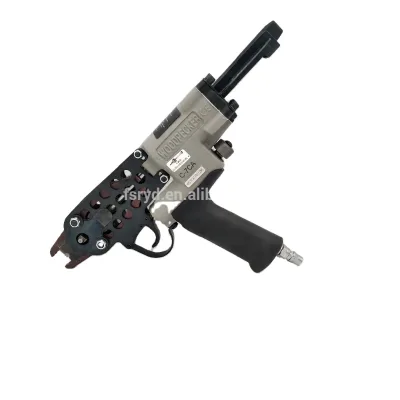
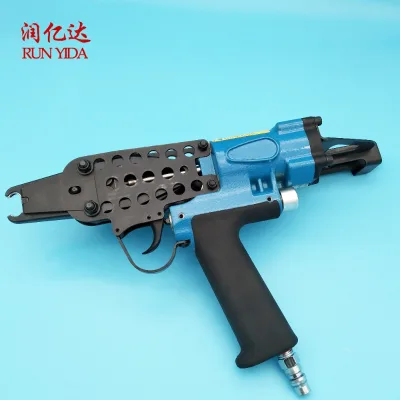
Pneumatic C Ring Pliers C2 Hog Ring Staple Air Gun Tool for Mattress Manufacturing
$469.00 - $489.00
MOQ: 1 Pieces


Pneumatic C Ring Pliers C2 Air Hog Ring Gun for Mattress Manufacturing
$469.00 - $489.00
MOQ: 1 Pieces

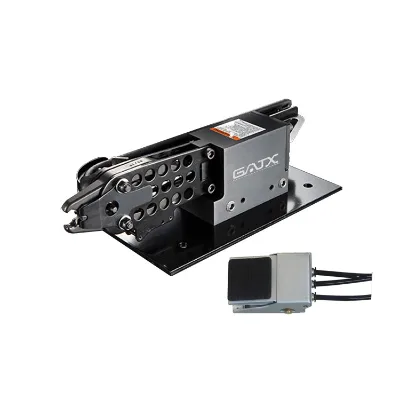
GT-112T-20 Pneumatic Air Gauge C-Ring Tool Hog Ring Plier Gun Stapler for Mattress Closure
$1020.24 - $1021.26
MOQ: 1 Minimum
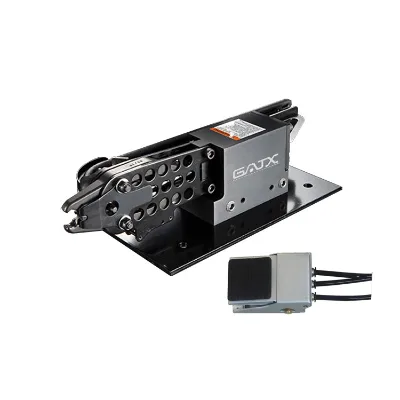
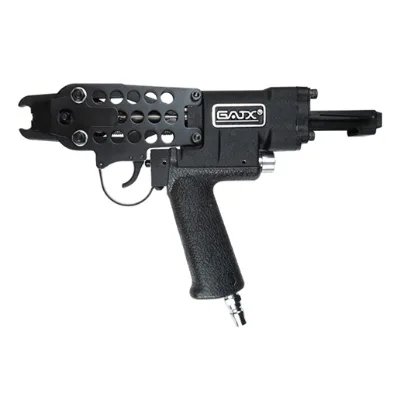
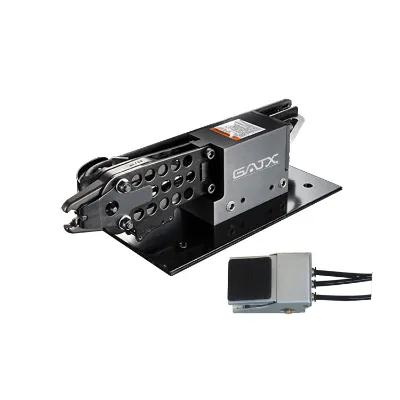
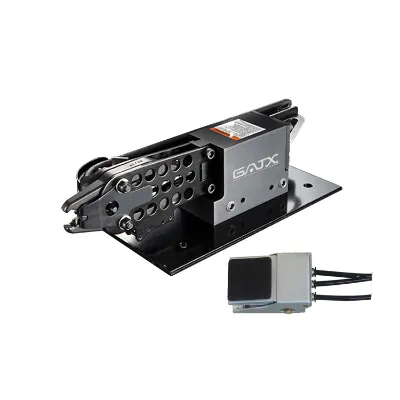
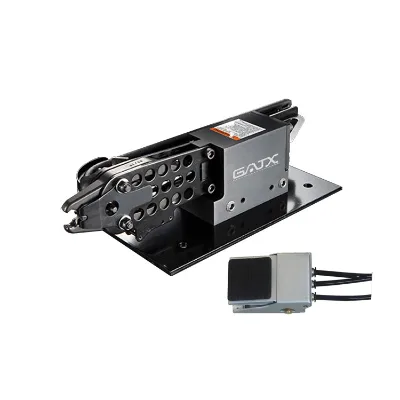
GT-110LT-75 C-ring Hog Pneumatic Pin Nail Gun Industrial Staple Tool
$1020.24 - $1021.26
MOQ: 2 Minimum


Comprehensive Sourcing Guide
Strategic Sourcing Guide for Twisting Pneumatic Hog Ring Tools
Understanding the Technical Landscape of Hog Ring Crimping Equipment
The procurement of a Twisting Pneumatic Hog Ring Tool requires a precise understanding of the mechanical attributes that define performance in industrial fastening applications. These tools are engineered specifically for the "Twisting" performance characteristic, a critical function that ensures the metal rings are securely fastened to upholstery, automotive interiors, and building decorations. The core operation involves the crimping of hog rings, which are small metal fasteners used to bind materials together. When sourcing these devices, buyers must recognize that the tool's efficiency is directly tied to its specific model designation and the physical dimensions of the rings it processes.
The supplied product data indicates a variety of models, including C1, C2, C3, C-7, C-77XE, and C-760A. Each model corresponds to distinct physical specifications that dictate its suitability for different tasks. For instance, the "Hog Ring Crown" dimension varies significantly across the catalog, ranging from 16.9mm for the C-77XE model to 63mm for the C2 model. This variation is not merely cosmetic; it determines the maximum diameter of the material bundle the tool can secure. Similarly, the "Hog Ring Thickness" is a critical specification, with observed values including 1.8mm, 2mm, and a variable range of 1.8/2/3mm. A procurement strategy that ignores these dimensional variances risks acquiring a tool that cannot accommodate the specific ring gauges required by the end application.
Furthermore, the physical construction of the tool influences its handling and durability. The "Tool Diamensions" (dimensions) provided in the data set show a clear correlation between model size and overall bulk. The C2 model, for example, measures 46x28x16cm and weighs 5.07kg, suggesting a heavy-duty application suited for high-volume or large-scale fastening. In contrast, the C-77XE model is more compact at 28x22x10cm with a weight of 2.2kg, likely intended for more delicate or portable tasks. The "Shaft Style" is consistently observed as "Straight," which simplifies the ergonomic interface for the operator but requires careful consideration of the workspace geometry. The "Handle Color" is noted as "Pure," a detail that may reflect standard industrial aesthetics but does not inherently impact performance.
Compliance, Standards, and Material Verification
In the B2B procurement of industrial tools, verifying the material composition and adherence to standards is paramount for ensuring long-term reliability and safety. The primary material identified for these tools is "Steel," a choice that offers the necessary tensile strength to withstand the high forces generated during the crimping process. However, the mere mention of "Steel" is insufficient for a rigorous procurement specification. Buyers must verify the specific grade of steel used, as this determines resistance to wear, corrosion, and deformation under repeated pneumatic pressure.
Regarding standards, the provided data lists specific product standards associated with each model, such as "C1," "C2," "C3," "C-7," "C-77XE," and "C-760A." These alphanumeric codes function as internal or industry-specific identifiers for the tool's design and manufacturing protocol. It is crucial for buyers to understand that these codes represent the baseline standard for that specific unit. While the data mentions "ISO 27001:2022" in a low-confidence background section, this standard pertains to information security management rather than the mechanical or safety standards of a pneumatic tool. Therefore, relying on this for tool certification would be a strategic error. Instead, procurement teams should focus on verifying the mechanical standards implied by the model codes and request explicit documentation on pressure ratings, cycle life, and safety compliance from the supplier.
The "Condition" of the tools is listed as "New," which is a standard expectation for direct procurement. However, buyers should also confirm the "Installation" requirements, which are noted as "Internal." This suggests that the tool may require integration into an existing assembly line or a specific mounting configuration rather than being a standalone handheld unit. This distinction is vital for facility planning and infrastructure preparation. Additionally, the "Business Type" of the supplier is identified as a "Manufacturer and Trading Company." This dual role implies that the supplier may have direct control over the manufacturing process while also managing distribution logistics. Buyers should leverage this to negotiate better pricing or customization options, as the manufacturer relationship often allows for more direct communication regarding technical specifications.
Cost Drivers and Pricing Structure Analysis
The financial aspect of sourcing these tools is influenced by several dynamic factors, including the complexity of the model, the customization options available, and the volume of the order. The observed price range for these products spans from $0.50 to $1,030.45 USD. This wide disparity indicates that the cost is not uniform across the product line but is heavily dependent on the specific model and its associated capabilities. The lower end of the spectrum likely corresponds to simpler, lighter-duty models or perhaps individual components, while the higher end reflects the heavy-duty, high-capacity units like the C2 model, which features a larger weight and dimension profile.
A significant cost driver is the "Customization" capability, which is explicitly marked as "Available." Suppliers offering customization can adjust the "Tool Diamensions," "Hog Ring Crown," or even the "Handle Color" to meet specific client needs. However, such customization inevitably introduces additional costs and potentially longer lead times. Buyers must weigh the benefits of a tailored tool against the budget constraints of the project. Furthermore, the "prod_packing" attribute states that packing is "According to Your Requirements." This flexibility can impact the final cost, as specialized packaging for export or specific handling requirements may incur extra fees compared to standard bulk packing.
The "MOQ" (Minimum Order Quantity) range of 1 to 100 units provides significant flexibility for buyers. A single-unit order might be feasible for prototyping or small-scale operations, while bulk orders of 100 units could unlock volume discounts. The "Capacity" of the supplier is noted as 125PCS, which suggests a moderate production volume. Buyers should consider this capacity when planning large-scale rollouts to ensure the supplier can meet demand without significant delays. The "prod_origin" is listed as "China," which is a common manufacturing hub for industrial tools. While this location offers competitive pricing, it necessitates careful consideration of logistics, import duties, and shipping lead times, which are not explicitly detailed in the data but are critical for total cost of ownership calculations.
Typical Applications and Operational Context
The versatility of twisting pneumatic hog ring tools is evident in their diverse application areas. The primary "Use Place" identified is "Building Decoration," indicating a strong presence in the construction and interior design sectors. In this context, these tools are essential for securing insulation, acoustic panels, and decorative fabrics to structural elements. The "Application Age" is specified as "Adult," which is a standard classification for industrial equipment, implying that the tools are designed for use by trained adult operators and are not intended for consumer or toy applications.
Beyond building decoration, the "Types" of tools listed as "Wire Clippers" suggests a secondary function or a related product line. While the primary focus is on hog ring crimping, the ability to clip wires or related components adds value to the tool's utility in complex assembly tasks. The "Twisting" performance is the defining characteristic that enables these tools to secure hog rings effectively. This mechanism is particularly useful in applications where a tight, secure fastening is required to prevent slippage or loosening over time.
The "Installation" type being "Internal" further refines the operational context. This suggests that these tools are often integrated into automated systems or workstations within a factory or workshop environment. The "Straight" shaft style facilitates this integration, allowing for precise alignment with the workpiece. Buyers should consider the workflow implications of these tools. For instance, a tool with a "Hog Ring Crown" of 63mm (C2 model) would be ideal for large-scale upholstery projects, whereas a tool with a 16.9mm crown (C-77XE) would be better suited for smaller, more intricate tasks. Understanding these application nuances is essential for selecting the right tool for the specific job at hand.
Supplier Evaluation and Quality Control Protocols
Evaluating a supplier for industrial tools requires a multi-faceted approach that goes beyond simple price comparison. The "Business Type" of "Manufacturer and Trading Company" offers a unique advantage, as it combines the technical expertise of a manufacturer with the logistical efficiency of a trading company. However, buyers must verify the supplier's actual manufacturing capabilities to ensure quality consistency. The "prod_standard" codes (C1, C2, etc.) serve as a baseline, but buyers should request detailed quality control reports that validate these standards against international benchmarks.
Quality control should focus on the "Material" composition, specifically the steel used. Buyers should request mill certificates or material test reports to confirm the steel grade and its mechanical properties. The "Weight" of the tools, ranging from 2.2kg to 5.07kg, is a key indicator of build quality. Heavier tools often imply the use of more robust materials and better engineering, but this must be balanced against the ergonomic requirements of the operator. The "Tool Diamensions" should also be verified to ensure they match the specifications required for the intended application.
The "Customization" option is a critical area for quality assessment. When a supplier offers customization, the buyer must establish clear specifications and acceptance criteria. This includes defining the acceptable tolerances for the "Hog Ring Crown" and "Hog Ring Thickness." The supplier's ability to meet these tolerances consistently is a strong indicator of their manufacturing maturity. Additionally, the "prod_packing" requirements should be aligned with the supplier's standard practices to prevent damage during transit. The "Condition" being "New" is a minimum requirement, but buyers should also inquire about the warranty terms and after-sales support, which are not explicitly detailed in the data but are essential for long-term procurement success.
Long-Term Procurement and Lifecycle Management
Sourcing a Twisting Pneumatic Hog Ring Tool is not a one-time transaction but the beginning of a long-term relationship that impacts operational efficiency and cost management. The "Capacity" of 125PCS suggests that the supplier may have limitations on large-scale orders, which buyers should factor into their production planning. If the demand exceeds this capacity, buyers may need to consider multiple suppliers or negotiate for increased production slots. The "MOQ" range of 1 to 100 allows for flexible ordering, but buyers should aim to optimize order volumes to balance inventory costs with the need for a steady supply.
The "Customization" feature offers a pathway to long-term value. By customizing the tool to specific needs, buyers can reduce downtime and improve the quality of their final products. However, this requires a deep understanding of the application and a collaborative approach with the supplier. The "prod_origin" in China offers cost advantages, but buyers must be prepared for potential supply chain disruptions. Establishing a robust relationship with the supplier, including regular communication and quality audits, can mitigate these risks.
Finally, the "Installation" being "Internal" implies that the tool will be part of a larger system. Buyers should plan for the integration of the tool into their existing infrastructure, ensuring that the necessary pneumatic lines, power sources, and safety measures are in place. The "Straight" shaft style and "Pure" handle color are design choices that should be evaluated for their impact on operator comfort and safety over long shifts. By considering these long-term factors, buyers can ensure that their investment in a Twisting Pneumatic Hog Ring Tool delivers sustained value and operational excellence.
Comparative Analysis of Key Model Specifications
To facilitate a clearer decision-making process, the following table summarizes the key specifications of the observed models. This comparison highlights the variations in weight, dimensions, and ring capabilities that define each tool's specific use case.
| Model | Weight (kg) | Dimensions (cm) | Hog Ring Crown (mm) | Hog Ring Thickness (mm) | Standard Code |
|---|---|---|---|---|---|
| C1 | 4.13 | 42x25x13 | 43 | 2 | C1 |
| C2 | 5.07 | 46x28x16 | 63 | 1.8/2/3 | C2 |
| C3 | 2.38 | 39x22x10 | 32.15 | 1.8 | C3 |
| C-7 | 2.33 | 39x22x9 | 23.7 | 1.8/2/3 | C-7 |
| C-77XE | 2.20 | 28x22x10 | 16.9 | N/A | C-77XE |
| C-760A | 2.32 | 36x23x10 | 27 | N/A | C-760A |
Note: Data derived from observed product attributes. "N/A" indicates that specific thickness data was not explicitly paired with the model in the provided list, though other models in the same series may share similar specifications.
This table serves as a reference point for buyers to quickly identify the tool that best matches their operational requirements. The significant differences in weight and dimensions underscore the importance of selecting the right model for the specific task, whether it involves heavy-duty construction or delicate finishing work. By aligning the tool's specifications with the application's demands, buyers can optimize their procurement strategy and ensure the highest level of performance.
FAQs
What models of twisting pneumatic hog ring tools are available?
Available models include C1, C2, C3, C-7, C-77XE, and C-760A. Each model features distinct dimensions and hog ring crown sizes to suit specific industrial fastening tasks.
Can I customize the tool dimensions and packaging?
Yes, customization is available for tool dimensions and packaging according to your requirements. Buyers can request specific adjustments to meet unique operational needs.
Which hog ring thicknesses do these tools support?
The tools support hog ring thicknesses of 1.8mm, 2mm, and a variable range of 1.8/2/3mm depending on the specific model. Select the model matching your ring gauge.
How much does a Twisting Pneumatic Hog Ring Tool weigh?
Weights range from 2.2kg for the compact C-77XE model to 5.07kg for the heavy-duty C2 model. The weight varies based on the tool's size and intended application.
What is the installation type for these tools?
The installation type is internal, suggesting integration into existing assembly lines or workstations. This requires specific mounting configurations rather than standalone handheld use.
Where are these tools manufactured?
These tools originate from China. The supplier operates as both a manufacturer and trading company, offering direct production control and distribution logistics.